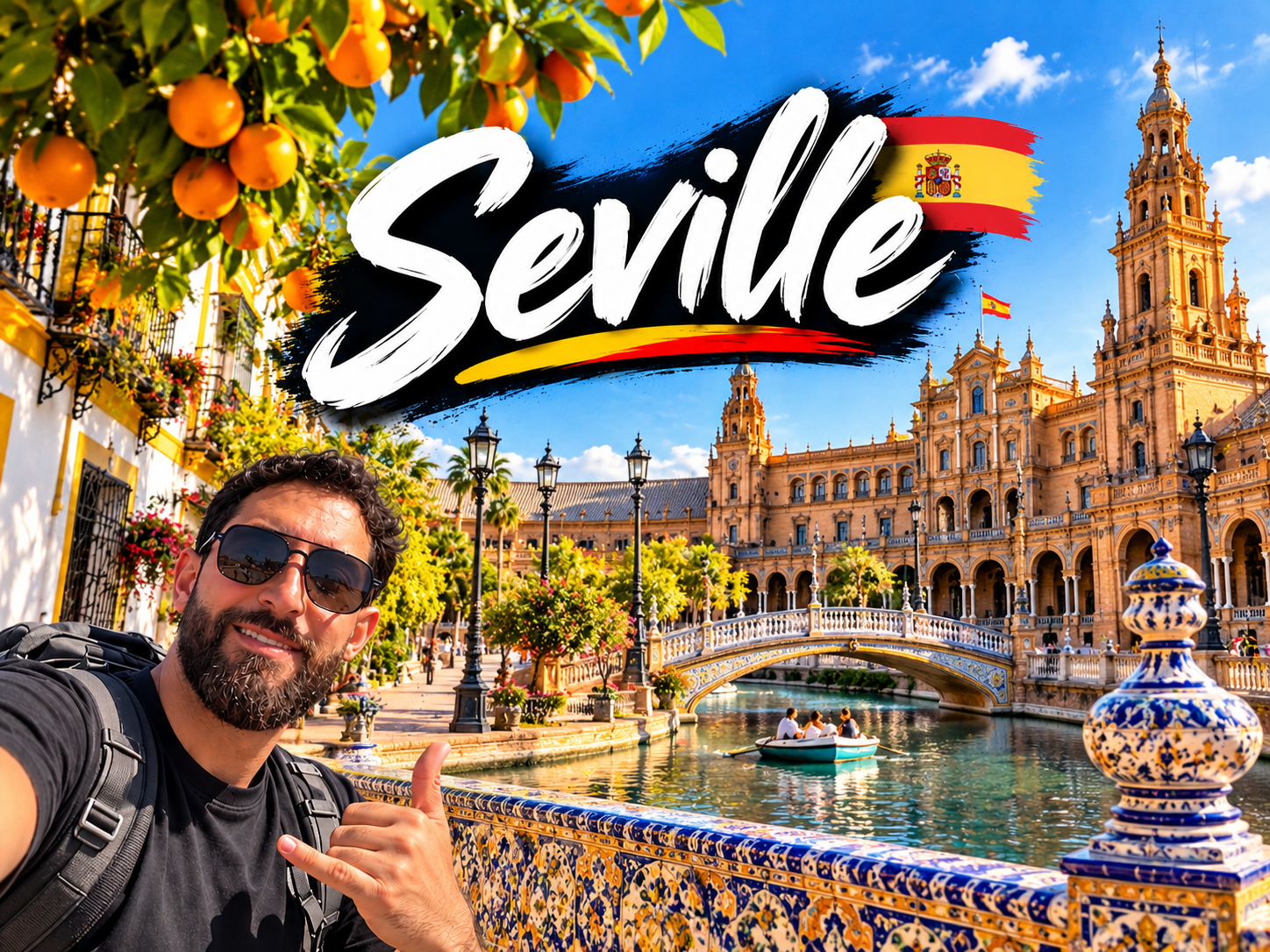
Salouf Seville cover montage with a traveler, orange trees and Plaza de España
Back to Travel

Spain

Seville

Seville brings together the Alcázar’s courtyards, the cathedral and Giralda, Triana’s ceramic traditions and flamenco. Much of the historic core is best explored on foot, with shaded pauses and an evening river walk. It suits travelers interested in Andalusian architecture, food and living culture, especially outside the hottest summer months.

Why visit

The city’s layered architecture and compact neighborhoods make a rewarding short break. Alternate a major monument with time in Santa Cruz, Triana or a park rather than scheduling nonstop interiors.

Best time to visit

March–May and October–November are useful starting points for walking, though rain is possible. Semana Santa and the Feria bring atmosphere, crowds and higher room demand; verify dates each year. June–September can be very hot, particularly July–August: use mornings and evenings for outdoor visits. Winter outside holidays may be cheaper, with cooler evenings and shorter days.

Suggested trip length

3 days for a first visit; 4–5 days allows a relaxed pace or a separate Córdoba trip.

Highlights

  • Real Alcázar — Santa Cruz edge. Palace courtyards and gardens reveal Seville’s layered history. Reserve through the official site and match the ticket name to your identity document.
  • Cathedral and Giralda — historic center. Visit the cathedral and former minaret for architecture and views. Check ticket options, worship access and the physical demands of the tower climb.
  • Plaza de España — María Luisa Park. The tiled bridges and provincial panels make a rewarding outdoor visit. Go early or late for softer light and less heat.
  • María Luisa Park — south of the center. Shaded paths offer a break from monuments and a useful family pause. Carry water; the walk from the old center still takes time.
  • Santa Cruz — near the cathedral. Explore narrow lanes and small squares for the old-town atmosphere. Walk without a rigid route, but respect residential courtyards and private entrances.
  • Triana and its ceramic center — west bank. Cross the bridge for market life and ceramic heritage. Check museum days and browse real workshops rather than assuming every souvenir is locally made.
  • Setas de Sevilla — Plaza de la Encarnación. The elevated walkway offers roofscape views. Check current admission and choose a time with comfortable temperatures.
  • Torre del Oro and riverside — Guadalquivir. Walk the riverbank for a different perspective on the city. Check museum access separately and avoid walking unshaded stretches at midday in summer.

Practical tips

  • Book the Alcázar and cathedral on their official sites, checking name and ID rules.
  • Avoid a long exposed walk at midday in summer; use shaded breaks and water.
  • Compare annual Semana Santa and Feria dates before choosing a hotel.
  • Reserve a flamenco venue for the performance, checking whether food is optional.
  • Inspect the route from your bus stop to a Santa Cruz hotel before arriving with bags.
  • Respect private patios and residential doorways when photographing the old town.

Beyond the landmarks

Browse Triana’s market, attend a flamenco performance with a clearly stated duration and venue, or explore Alameda’s cafés. For a day trip, Córdoba by rail is realistic with a reserved train and a separate monument booking; check schedules. Do not treat Granada as a quick add-on to a short Seville day. During Feria, distinguish public-access tents from private ones.

Suggested itineraries

One day: Alcázar or cathedral, a Santa Cruz walk and the riverside. Choose one major interior if queues or arrival time limit you.

Three days: day 1 Alcázar, cathedral and Santa Cruz with a lunch pause; day 2 Plaza de España/María Luisa and Triana; day 3 Setas, markets and an optional flamenco evening. In heat, reduce the midday schedule.

Five days: add Córdoba as its own day and one slower Seville day for museums, cafés or a neighborhood walk.

Airport and local transport

The EA airport bus links Seville Airport with Santa Justa, central stops and Plaza de Armas. The official January 2026 fare sheet lists €6 for a single airport ticket, checked 12 October 2026; check current hours and your nearest stop. Local TUSSAM buses, the tram and metro cover different routes and ticket products. The old center is mostly walkable, but heat changes practical distances. A car is unnecessary for the center and can create parking/access problems; rail is useful for Córdoba.

Where to stay

Santa Cruz: first-visit monuments nearby, but narrow lanes, noise and stairs can complicate luggage. El Arenal: useful for the river and main sights, often a higher budget. Triana: neighborhood atmosphere and family stays, with a bridge walk to the center. Alameda/Macarena: possible value and nightlife, so check noise and walking distance. Nervión/Santa Justa: convenient for rail and broader hotels, less atmospheric for evening old-town walks.

Food and halal planning

Look for espinacas con garbanzos, gazpacho, salmorejo and fried fish. Salmorejo often comes with ham; request it without ham and verify stock and preparation. Tapas menus frequently include pork and wine sauces; halal suitability must be confirmed, including frying oil. Markets, shared tapas and a lunch menu can help the budget. Choose restaurants advertising halal service explicitly and ask about certification rather than assuming seafood or vegetables guarantee it.

Estimated travel budget

Planning estimates per adult/day in EUR: €30–65 for a share of a basic double room, €20–35 food, €3–8 city transport and €0–25 attractions: around €53–133 total. Semana Santa/Feria, solo rooms and flamenco can exceed this range. These are planning allowances, not confirmed room or admission prices. Flights, airport transfers, visa, insurance and day-trip trains are excluded. Compare final accommodation totals for your dates.

Practical information

Currency: EUR. Main language: Spanish; English is useful at major sights. Time zone: Europe/Madrid, UTC+1 in winter, UTC+2 in summer. Electricity: 230 V, C/F plugs. Emergency: 112. Use TUSSAM’s route information and offline maps. Check Moroccan roaming charges or a compatible SIM/eSIM. Restaurants may serve dinner later than you expect; confirm kitchen hours. Dress respectfully in churches and avoid photographing residents inside private patios.

Entry for Moroccan passport holders

Visa required for ordinary Moroccan passport holders traveling for tourism; this is not visa-free entry, visa on arrival or an automatic e-visa route. Check the destination country’s consulate or official visa portal for the current procedure and your personal circumstances. A residence permit from another country does not automatically provide entry rights. Review your visa’s validity, number of entries and permitted territory; a visa does not guarantee admission. Apply to the appropriate main-destination authority and verify transit requirements before paying for travel.

For a short Schengen visit, the general limit is 90 days in any 180-day period across the area, subject to the shorter stay on your visa. Check the official rules for passport validity and supporting documents, including accommodation, funds, return travel and insurance. Recheck official entry guidance close to departure; this guide was researched on 12 October 2026.

Sources and verification

Related travel deals

seville
Price idea — verify availability

Rabat - Seville, Spain

Seville from Rabat: 4-night Spain getaway

A 4-night Seville trip from Rabat with direct return flights and an estimated shared Airbnb stay.

Duration
4 nights / 5 days
Flight
812.96 MAD
Stay
2000 MAD

Updated:

View deal