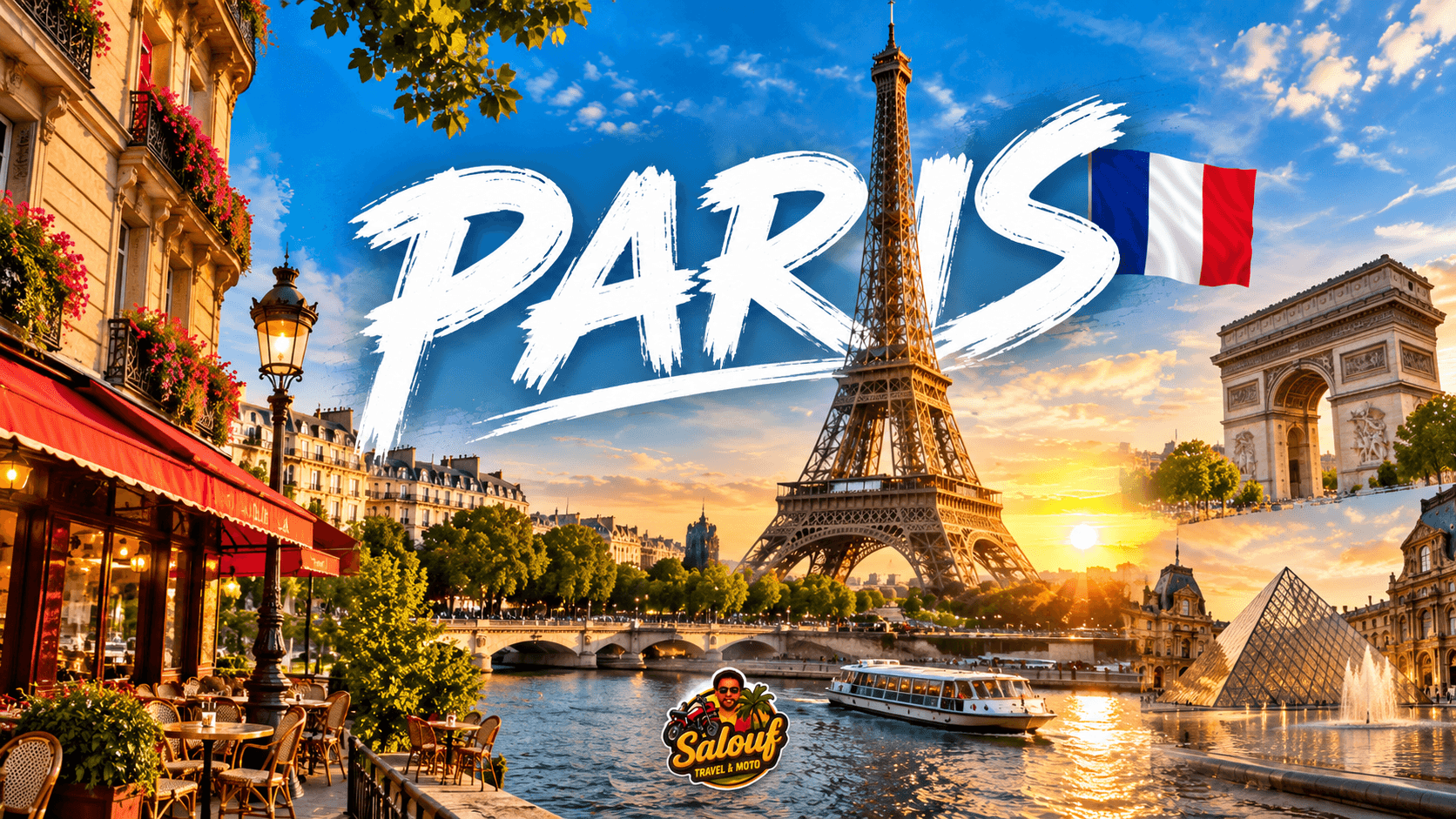

Salouf Paris cover illustration combining the Eiffel Tower, Seine, Louvre and Arc de Triomphe
Back to Travel

France

Paris

Paris rewards a mix of major museums, Seine-side walks and time in distinct neighborhoods. Pair the Louvre or Orsay with a market lunch, the Marais with historic islands, or Montmartre with a slower café morning. It suits art lovers and first-time city visitors, but reservations and transport planning matter more than a long checklist.

Why visit

The appeal is the variety within walkable neighborhoods: art, architecture, food and everyday street life. Keep one major booked visit per half-day and leave room for unplanned walks.

Best time to visit

April–June and September–October are pleasant for walking, with rain and cool evenings possible. July–August is busy at major sights and can bring heatwaves; some neighborhood businesses take holidays. November–February may offer better-value rooms outside Christmas and major events, with short days and cold weather. Fashion weeks and large trade fairs can raise hotel prices in otherwise quieter months.

Suggested trip length

4–5 days for a first visit; 3 days requires choosing museums. Add a separate day for Versailles.

Highlights

  • Eiffel Tower and Trocadéro — 7th/16th arrondissements. Enjoy river views and the tower’s exterior without admission. For an ascent, reserve the official floor and access method you want.
  • Louvre — 1st arrondissement. Choose a few galleries and allow a half-day. Reserve a timed ticket and check closure days and eligibility; Moroccan visitors should not assume European youth concessions apply.
  • Musée d’Orsay — 7th. Its former railway station houses major nineteenth-century art. Make it a separate museum session from the Louvre, checking the official ticket and opening calendar.
  • Notre-Dame and Île de la Cité — central Seine islands. Explore the cathedral area and nearby riverbanks. Check the cathedral’s official access arrangements and avoid sellers charging for ordinary cathedral entry.
  • Sainte-Chapelle — Île de la Cité. Visit for stained glass, preferably with daylight. Reserve official admission and allow time for security; it is a different ticket from Notre-Dame.
  • Montmartre and Sacré-Cœur — 18th. Walk the hill’s lanes and enjoy city views. Expect stairs and crowds near the basilica; decline unwanted bracelet offers and follow quieter side streets.
  • Arc de Triomphe — 8th, Place Charles-de-Gaulle. The terrace offers a different city panorama. Reach the monument via the pedestrian underpass; never cross the traffic roundabout.
  • Le Marais and Place des Vosges — 3rd/4th. Historic courtyards, small museums and independent shops make a good walking afternoon. Check individual museum days and leave room for a square-side break.

Practical tips

  • Book official timed tickets; do not assume one sightseeing pass removes all reservations.
  • Keep your validated transport ticket or digital proof until after exiting.
  • Use the underpass to reach the Arc de Triomphe.
  • Keep valuables secure on crowded trains and decline unsolicited petitions or bracelets.
  • Check current museum concession rules for your age and residence; Moroccan nationality alone does not qualify for European concessions.
  • Choose one neighborhood for dinner rather than crossing Paris between every stop.

Beyond the landmarks

Browse neighborhood produce markets, picnic in Luxembourg Gardens or walk Canal Saint-Martin. A Seine cruise can be a relaxed alternative to more walking; compare departure points and commentary. Versailles deserves a full separate day with official tickets and regional transport. Do not combine it with Disneyland or several central museums.

Suggested itineraries

One day: Notre-Dame area, Seine riverbanks and one chosen landmark; enjoy the Eiffel Tower from outside if time is tight.

Three days: Louvre and Tuileries; Eiffel/Trocadéro and Orsay if desired; Île de la Cité and Marais. Substitute Montmartre for a museum if you prefer neighborhoods.

Five days: add Montmartre and either Versailles or another neighborhood day. Check museum closure days before fixing the order and keep airport time out of sightseeing days.

Airport and local transport

CDG connects by RER B; Orly by metro 14. The Paris Region Airports ticket is €14 one way for these airport rail journeys, checked 12 October 2026; ordinary metro/train tickets do not cover the airport section. Beauvais is farther away and needs its own transfer plan. Use Île-de-France Mobilités to compare single tickets, Navigo and Paris Visite for your actual dates. Metro stairs can be difficult with luggage or a stroller: consult accessibility and use buses where practical. A car is unnecessary within Paris.

Where to stay

Latin Quarter: walkable historic sights and useful transit, often costly. Marais: restaurants and central walks, with small rooms and evening noise possible. Bastille/11th: food and nightlife; check quiet streets. Montparnasse: practical rail/metro connections and a possible value compromise. Families may prefer quieter residential streets near Luxembourg or a park. Compare room size, lift access and actual metro distance; an outer hotel can trade savings for long commutes.

Food and halal planning

Try bakery bread and pastries, crêpes and neighborhood market food. Paris has halal restaurants, including North African and other cuisines, but verify meat sourcing and certification at each address. Sauces may contain wine and pastries can contain alcohol or gelatin. Bakeries, supermarket picnics and set lunch menus can cost less than landmark-facing terraces; compare eat-in and takeaway prices.

Estimated travel budget

Planning estimates per adult/day in EUR: €55–100 for a share of a basic double room, €25–45 food, €6–12 local transport and €0–35 attractions: roughly €86–192 total. Major museum days can exceed the activity allowance; the Louvre publishes different visitor-rate eligibility. These are estimates, not hotel offers. Excludes flights, airport transfers, visa, insurance and separately charged tourist taxes. Solo travelers should budget a full room or price hostels separately.

Practical information

Currency: EUR. Main language: French; English is available in many visitor services. Time zone: Europe/Paris, UTC+1 in winter, UTC+2 in summer. Electricity: 230 V, C/E sockets; check your Moroccan charger’s fit. Emergency: 112. Île-de-France Mobilités provides transport information; offline maps help underground. Check Moroccan roaming charges or use a compatible SIM/eSIM. Greet staff with “bonjour,” keep valuables secure and avoid leaving phones on café tables.

Entry for Moroccan passport holders

Visa required for ordinary Moroccan passport holders traveling for tourism; this is not visa-free entry, visa on arrival or an automatic e-visa route. Check the destination country’s consulate or official visa portal for the current procedure and your personal circumstances. A residence permit from another country does not automatically provide entry rights. Review your visa’s validity, number of entries and permitted territory; a visa does not guarantee admission. Apply to the appropriate main-destination authority and verify transit requirements before paying for travel.

For a short Schengen visit, the general limit is 90 days in any 180-day period across the area, subject to the shorter stay on your visa. Check the official rules for passport validity and supporting documents, including accommodation, funds, return travel and insurance. Recheck official entry guidance close to departure; this guide was researched on 12 October 2026.

Sources and verification

Related travel deals

paris deal
Price idea — verify availability

Agadir - Paris

Paris for 7 Nights from Agadir

A 7-night Paris plan from Agadir with return Ryanair flights and a private Airbnb stay for two, from about 2,733 MAD per person.

Duration
7 nights / 8 days
Flight
819.77 MAD
Stay
1913 MAD

Updated:

View deal